




















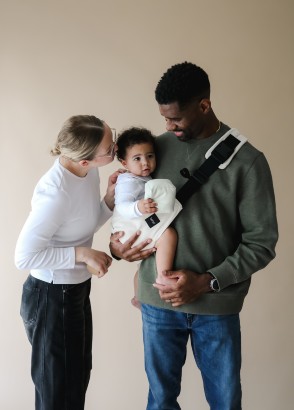
If you have a toddler, you’ll probably be very familiar with how they will be happily walking along, before suddenly wanting to be carried, despite all encouragement to keep walking. And then, after a few moments of carrying, they’ll be desperate to get down and walk again. And so, the cycle repeats! Toddlers often switch between wanting their independence to needing comfort, or a rest from one minute to the next. This is one of the reasons toddler carrying aids (or carrier assist options) such as hip carriers have become popular with parents of older babies and toddlers.
Brands like Wildride have helped bring these carriers into the spotlight, especially for parents who are looking for a quick, stylish way to carry their toddler, as well as an option that is lightweight and can be popped into a bag when not in use.
But hip carriers are quite different from traditional baby carriers. They aren’t designed for hands-free babywearing or long walks. They are designed to make short carries easier and more comfortable, which is why they are known as “carrier assist” carriers.
In this guide we’ll cover:
- What a hip carrier is
- When they’re useful
- Safety tips
- Popular brands like Wildride
- How hip carriers differ from structured carriers
- Pros and cons to consider