null

Your Mini Cart

Introducing Solids to your Baby: All Your Questions Answered

Introducing Solids to your Baby: All Your Questions Answered

Introducing solids to your baby is a significant milestone for your little one, but it can be a stressful and messy time for you, with lots of questions and potentially conflicting advice.  

When should you start solids? What foods are best? What is Baby Led Weaning? These are just some of the questions that may be coming up in your mum’s group or keeping you awake at night. Don’t panic, we’re here to help! From signs of readiness to essential feeding equipment and ideas for feeding schedules, we've got your questions covered, so you can enjoy a stress-free start to solids.


When should my baby start solids?

Health organisations and professionals, including breastfeeding experts & Health NZ, agree that breastmilk or formula is all your baby needs until six months of age. Between 6-8 months of age your baby may be showing signs of wanting to start solids, but they need to be physiologically and developmentally ready. It’s also important to remember that solids are not a replacement for milk (formula or breastmilk) at this age and milk should still be offered first. At this age, any solids are complementary to milk.

Read more detail about when to start solids 


How do I know my baby is ready for solids?

If your baby is 6 months old and you think they might be ready for solids, there’s a few signs you can look for. You’ll find it much easier to start solids if they’re ready. According to Health NZ, Te Whatu Ora (Starting Solids - HE6014, March 2025) and Plunket NZ, your baby is ready to start exploring solids if they:

  • Can hold their head up and have good neck control
  • Are able to sit up while supported
  • Are showing interest in food - including opening their mouth when you're eating or reaching out for your food
  • Often put their hands or toys in their mouth
  • Make chewing movements
  • Seem hungry after their milk feed

My baby is ready for solids - what foods should I introduce first?

Baby’s first foods should be smooth and easy to digest, so most people start with pureed vegetables and fruit. Health NZ Te Whatu Ora recommends iron-rich foods including purees of meats, cooked vegetables, skinless fruit or legumes. It is recommended to introduce one food at a time so you can identify any allergies early on. As well as vegetables, legumes, meats and fruits, you can also try iron-fortified baby cereals or baby porridge, mixed with breast milk or formula.  

Popular first foods include pureed pumpkin, carrot, avocado, lamb, apple or pear. Once you’ve tried a few individual foods, start mixing foods together, for example potato and broccoli or lamb and pumpkin.

Most babies will be ready for mashed foods and soft finger foods from 7-8 months and these will help your baby learn to bite and chew. For specific advice, check with your baby’s health provider.


Should I start with purees (spoon-feeding) or baby-led weaning?

Whether to start with purees or baby-led weaning is personal preference, based on your personal beliefs, parenting style and what stage your baby is at.  

In New Zealand, Health NZ Te Whatu Ora cites a lack of evidence and research about Baby Led Weaning and recommends starting with Baby Purees. Whilst Health NZ states that Baby Led Weaning “may encourage greater awareness of internal hunger and satiety (feeling of fullness) cues in infants”, they also state that Baby Led Weaning “could negatively impact on infant iron status, and increase the risk of food-related choking and growth faltering in infants” (2024, July 18) Health New Zealand.

Whichever approach you decide to take, offering first foods at the right time of day (i.e., when baby is calm and happy) with age-appropriate options should get your solids journey off to a good start.


What is Baby-Led Weaning?

Baby Led Weaning is different to spoon feeding purees in that your baby is offered a selection of finger foods and they choose what they want to eat from what’s on offer. They pick the foods up themselves and place them in their mouth. This is different from purees, where a baby is spoon fed puree by an adult and usually offered one food at a time (in the first few months).  

Like purees, your baby should be developmentally ready for Baby Led Weaning, which is around the 6 month mark. Look for signs that they can sit up with less help, reach for your food, make chewing movements and are generally more interested in food.  

If you’re going ahead with Baby Led Weaning, finger foods should be very soft. Regardless of whether you start with spoon feeding purees or baby led weaning by around 7-8 months of age your baby will be ready for soft finger foods.


Should I start with vegetables, fruit or baby cereals?

Most people will start their baby on pureed vegetables, pureed fruit or iron-fortified baby cereal. But as long as the food is age and stage appropriate, it’s your choice what exact food you introduce first. If your baby isn’t accepting solids well you could try mixing the food with breastmilk or formula for a more familiar taste. Before 12 months of age, breast milk or formula still provides the majority of nutrients, so if your baby doesn’t take purees well initially, keep trying.

As well as providing nutrients, your baby’s first foods will help develop their taste preferences, so starting your baby on vegetable purees may help to develop a preference for vegetables as your child grows. A Massey University study, published in The American Journal of Clinical Nutrition in 2022 found that “introducing vegetable-only first foods, rather than a combination of fruit and vegetables, at the start of CF [complementary feeding] increases vegetable intake by 9 months of age” and suggests parents could offer a variety of vegetables, such as spinach or broccoli instead of the traditional fruit or sweeter flavours like pumpkin in the early days of solids to improve acceptance later on.  


What foods should I avoid when starting solids?

Salt and sugar should be avoided as part of baby’s first foods. Honey, which can have botulism, should also be avoided. Any dairy, such as yoghurt and cheese should be full-fat until your child is 2 years old and cow’s milk (as a drink) should be avoided until your baby is over 1 year old. It can be used on cereals and in cooking before the age of 1. Once your baby is over 12 months you can introduce cow’s milk as a drink. If you’re choosing to use any commercially prepared foods ensure they are age and stage appropriate.  

For a full guide on Healthy Eating for Babies and Toddlers, consult Health Ed.


What about herbs, spices and flavourings?

Baby’s first foods help develop their palate so blending certain herbs and mild spices can help them accept other foods when they’re older. Using herbs such as basil, mint, parsley and oregano in vegetable and / or meat purees or spices such as cinnamon, cumin or mild paprika can help develop tastes, but also help make it easier for you to share your own meal. Never add salt, sugar, sweeteners, hot spices or processed flavourings which usually contain a high level of salt.


How do I actually feed my baby solids?

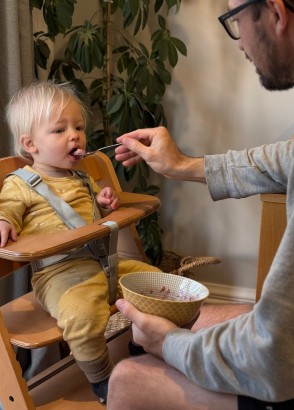
If you’re using purees for baby’s first solids you can use a teaspoon or specially designed baby feeding spoon to feed your baby. A standard teaspoon is absolutely fine, though you may find a silicone spoon softer on baby’s gums. A specially designed baby feeding spoon would usually have a chunkier handle making the spoon easier for your baby to hold when they are ready to start self-feeding.

In terms of where to feed your baby, there are a few options. If your baby can sit upright on their own, you can sit them in the high chair for their first tastes, but if they still need support you can sit them upright in your lap (supported) and use a spoon or finger to feed your baby. At first, your baby will likely only have a few tastes, usually 1-2 teaspoons of puree.  


How much should my baby eat?

Babies have small tummies, so when you’re first starting out, Plunket NZ advises 1-2 teaspoons of puree is enough, especially as it's a supplement to breast milk or formula until around 12 months of age. Before the age of 8-9 months, formula or breast milk should always be offered before solids. It’s not until your baby is older that they should have solids first.

Once your baby is more established on solids and is having their food before milk, they will get up to about 3-4 tablespoons (½ cup) of puree 2 - 3 times a day (around 9 months of age). Your baby will guide you as to how much they will eat. For example, if they have had enough they will likely turn their head away from the food or shut their mouth.


When should I give my baby their food?

Aim to offer solids when your baby is settled and happy, not overly tired, usually in the morning or mid-morning. At six months of age, one solids’ meal around midday is usually a good option. As your baby grows and starts to eat more meals, you can introduce a second feed at breakfast, after their first milk feed of the day or later in the day around 5.30pm. It’s a good idea to stick to the same routine and keep solids at a similar time so your baby learns what to expect and when.
 
Here’s an example of how to time your baby’s first solids at 6-9 months and then at 9-12 months, when they are eating more frequently.  

*Please note solids can be omitted at these times when baby is first starting solids

6 - 9 Months 9 - 12 Months

Wake & Feed

6.30am

7.00am

Solids*

8.00am

8.00am

Sleep

9.00am

9.30am

Feed

11.00am

11.00am

Solids*

Noon

Noon

Sleep

1.00pm

1.30pm

Feed

3.00pm

3.00pm

Nap

4.30pm

Not needed

Solids*

5.30pm

Bath

6.00pm

6.00pm

Feed

6.30pm

6.30pm

Bedtime

7.00pm

7.00pm


I'm allergic to certain foods, how should I introduce these to my baby?

If you have a family history of allergic reactions or are concerned about allergies, talk to your health professional before offering common allergy-causing foods such as nut butters, egg or dairy.

Health NZ recommends you only introduce one potential allergy-causing food at a time so you can easily monitor any reaction. Common allergic reactions include a rash or swelling. If there’s no reaction you can keep giving the food regularly to help prevent any developing allergies.  

If you’re worried you could keep a food diary where you record which foods you’re giving baby and when, so that you can monitor reactions and determine what may be causing them. For further advice talk to your Well Child Tamariki Ora provider or GP.


How do I prep baby puree?

Baby purees are relatively easy to prepare, because it’s a single food with no additives.

  • Choose your vegetable (or fruit)
  • Peel it (if necessary) & chop it
  • Boil (or steam) until the food is tender.
  • Blend or place in a food processor to puree with either boiled water, expressed milk or formula to get the right consistency.


Baby's first purees should be relatively runny and as your baby accepts more solids, you can start to make the purees thicker. Foods that are already soft, such as avocado or banana can be mashed easily with a fork. Never add salt, sugar or sauces to the food.

It's easy to make bulk lots of puree and freeze the leftovers in a special tray or an ice cube tray. Then simply thaw and gently heat when you need it, making it easy to combine flavours later on. Always remember to test the temperature before giving your baby their food, especially if it has been microwaved.


When should I start giving my baby water?

Before 6 months of age breastmilk or formula is everything a baby needs. Once you’ve started your baby on solids at around 6 months you can start to introduce water in a sippy cup or open cup. This will help your baby digest foods and learn how to drink. Breastmilk or formula is still their most important source of hydration and nutrition. Once your baby reaches 12 months of age water can become their main source of hydration.


Which products should I have ready for starting solids?

You actually need very few specific baby products for starting solids. If budgets are tight, a standard teaspoon and your usual dinnerware will suffice, just make sure to keep anything breakable away from your baby - they have a knack for turning bowls upside down and throwing them around!

Eventually you will likely need a high chair for your baby and this is probably the biggest expense when starting your solids’ journey. Whilst your baby can sit upright on your lap initially, as they grow and become more mobile and independent, you will likely find a high chair becomes easier for everyone. It will also help your baby sit upright and eat independently, whilst keeping your hands free to help them at mealtimes or eat your own food hot!

High Chair

Look for a high chair that meets the Australasian safety standard (AS/NZS 8124.3:2012) or the European standard. From then, consider your kitchen / dining room set up and where you’ll be using the high chair most. Do you want a style that can push to the table and the baby eats from the table, or a style which has a tray and can be used away from a table. What about a style such as a booster seat or clip on chair? These tend to be better for babies who are already sitting up confidently, but they have the added bonus of being portable.

Think about how long you might want to use it for. Some high chairs can be used from newborn (with a special bouncer style attachment) right through to adulthood as a chair, whilst others are only suitable from approximately 6 months until toddlerhood. Other things to consider include whether the high chair comes with everything you need or whether seat cushions, trays and safety straps are added extras.

HAUCK
Sold out
View Product

Dishware & Cutlery

Silicone infant spoons - when baby is first starting solids you may want to invest in a silicone spoon, which is gentler on baby’s gums than a standard teaspoon, however this isn’t necessary.

If you’re looking for a feeding spoon that’s more tailored for a baby, there’s a huge range to choose from. The size and grips on the Bumkins Chewtensils range are ideal for younger babies who are self-feeding. For older babies and toddlers who can self feed better, the Bumkins spoon and fork set or the Melii utensils are good options.

Non-breakable plates or bowls. It’s almost inevitable that your baby will throw a bowl of food on the floor at some stage of their feeding journey, so look for dishware which won’t break or chip if thrown or if a fork is bashed on it several times.  

Silicone or plastic tableware is a popular choice at this stage and usually one simple bowl or plate is enough whilst your baby is eating small amounts. Once your baby is older you could choose a divided plate or tray to better portion different types of foods. The Bumkins or Re-play styles are perfect, because you can offer one main food with sides of fruit or vegetables.

You could also consider a bowl or plate with a suction bottom, such as the Bumkins Grip Dish which will suction to a surface to prevent it being upturned. You will however need to check the grip and what surfaces it works on, because not all grips stick to all surfaces.  



BUMKINS
Sold out
View Product

Fresh Food Feeder

Fresh Food Feeders are usually the shape of a small hand-held iceblock with a silicone or mesh ‘pouch’ attached. This allows you to place harder foods, such as apples or pears into the feeder and give it to your baby without the risk of them choking as only small, digestible pieces of food can pass through the mesh. They still get to bite and suck to get the flavour, without ingesting and potentially choking. They can also be used for teething, by placing breastmilk or pureed food into the pouch and freezing and then giving to baby to cool their gums. These are a nice to have, rather than a necessity.

HAAKAA
Sold out
View Product

Bibs

Mess. One of the “joys” of solids! From puree all over your baby’s face to peas flung around the room, eating can be a messy business, especially if you have a little one who loves to fully immerse themselves in their food. That’s where bibs and splat mats can help. If you have a messier baby and want more protection for baby’s clothes, a full-sleeve waterproof bib may be a good idea. For a baby who is mess-averse a traditional bib may be all you need. Some of the sleeveless silicone bibs have a catcher at the bottom to catch those rogue bits of food which get dropped.


THE SLEEP STORE
Sold out
View Product

Messy Mat / Splat Mat

If you have carpet or a hard to clean flooring type you may want to invest in a messy mat / splat mat which is easy to wipe down and will prevent liquids from soaking into the carpet. Look for an option that’s machine washable to try and keep the washing pile controlled! These are also easy to gather up and shake outside or into the sink if lots of food has been dropped.

BUMKINS
Sold out
View Product

Sippy Cup

When giving your baby water, they’re likely to start “experimenting” with angles, tipping their cup upside down and every which way it can go as well as giving it a good shake to see what can come out! A sippy cup will make it easy to introduce water without the mess.

A wide range of cup styles is available, including sippy cups with straws, cups with a 360 degree sipping rim or cups with a sipper top. It may take your baby a few goes to get the idea of sipping, so if they don’t take to one style straight away, keep trying. If they seem to be struggling, giving them a small amount of water in a small plastic/silicone cup might be a good way to start initially. The Bumkins Silicone Starter Cup is good for this reason.

Our most popular sippy cups include the B.Box sippy cups and the Re-Play no-Spill sippy cups.


B.BOX
Sold out
View Product

Freezer Trays

Babies only eat 1-4 teaspoons of food at first, so making individual purees everyday is inefficient. If you have a blender or food processor, make a bulk lot and freeze small portions to save time. This also allows you to combine more flavours easily when your baby has been exposed to other foods. Whip out a cube of pumpkin puree, mix it with potato and peas and boom, you’ll have three flavours in one! Easy-peasy.

There’s a wide range of freezer trays from brands including Melii and Haakaa.


MELII
Sold out
View Product

Blender / Food Processor

Blenders and food processors can be expensive, so these are “nice to have”. But if you can afford one, they will help to make your food prep a little easier as you'll be able to make a bulk lot of purees to freeze for later. You can also make several different purees, freeze and then gently warm and mix different flavours for serving. Plus, when your baby is eating more variety, it’s a quick and easy way to serve what you’re eating - just blend and serve (ensuring you haven’t salted your food first).


Final tips for a smooth transition to solids

Now that you’re feeling more confident with the basics (hopefully!), you’re ready to introduce solids. It may feel daunting, but it’s another exciting milestone in your baby’s growth and development.  

Remember, even with all the knowledge and planning, it may not always go smoothly, and that’s ok! Every baby and family is different, so adjust to their needs and your schedule and before you know it, you’ll forget what you were even worried about.

Start by offering small amounts of food in a calm environment and don’t worry if your baby isn’t interested just yet. Let them play with and explore the food, building their familiarity with food types in a comfortable environment at a similar time of day.

As always, we’re here to answer any questions. Reach out on our socials or direct to our customer service team.


References
  1. Health New Zealand Te Whatu Ora, March 2025, Starting Solids. Accessed October 2025 at https://healthed.govt.nz/cdn/shop/files/1.0_HE6014-Starting_Solids-WEB.pdf?v=16852325229155540161

  2. Rapson JP, et al (2022 Jul 6). Starting complementary feeding with vegetables only increases vegetable acceptance at 9 months: a randomized controlled trial. Am J Clin Nutr, Volume 116, Issue 1, 111-121. Accessed October 2025 at https://mro.massey.ac.nz/server/api/core/bitstreams/8ce75529-aaed-46fa-bcec-4db844e9a655/content

  3. Baby-led weaning – Health NZ position statement (updated 2024, July 18). Accessed 6 October 2025, from https://www.tewhatuora.govt.nz/health-services-and-programmes/nutrition/baby-led-weaning-te-whatu-ora-position-statement